










About Wazo
Bringing the power of ultrasound everywhere.
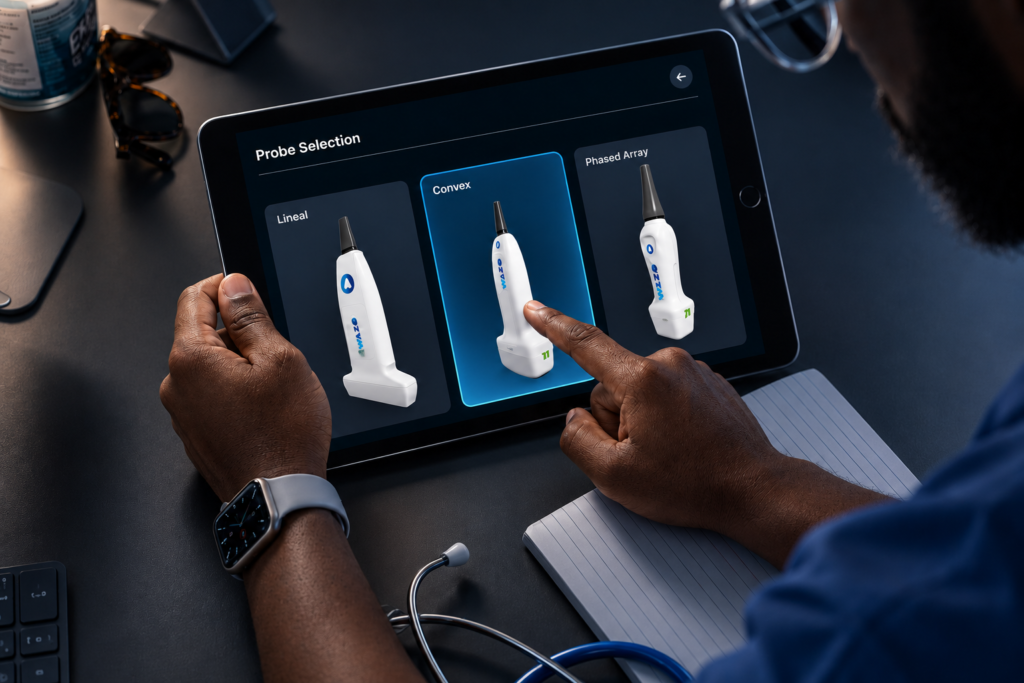
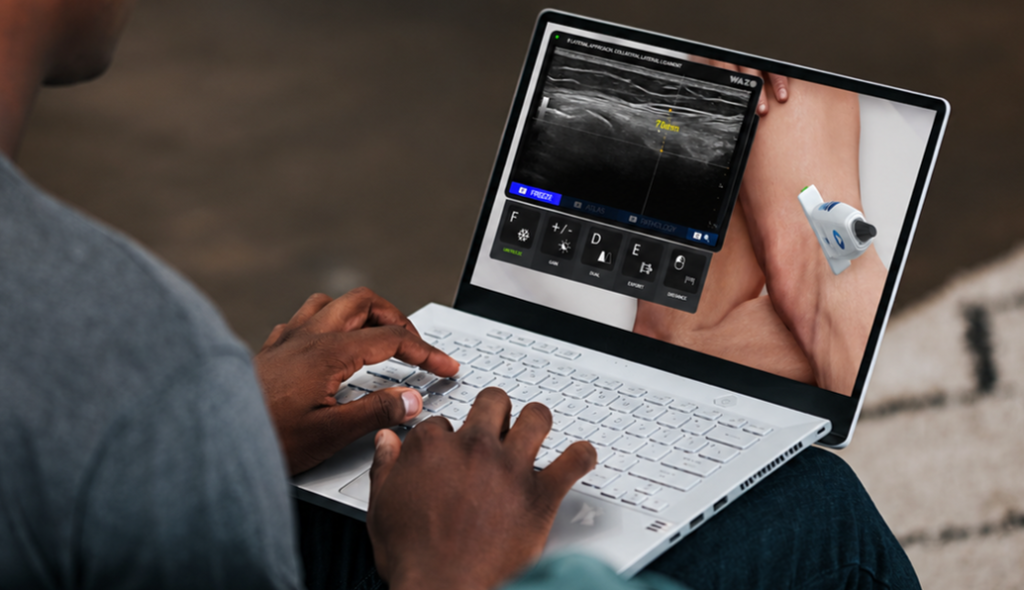
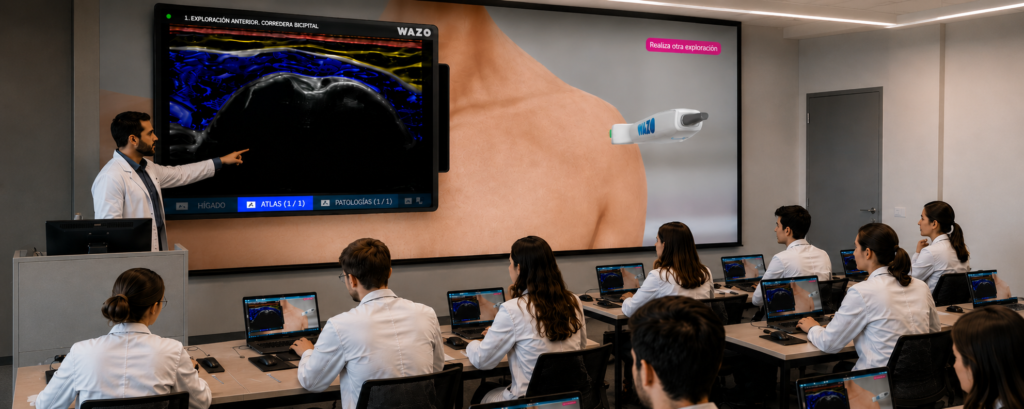
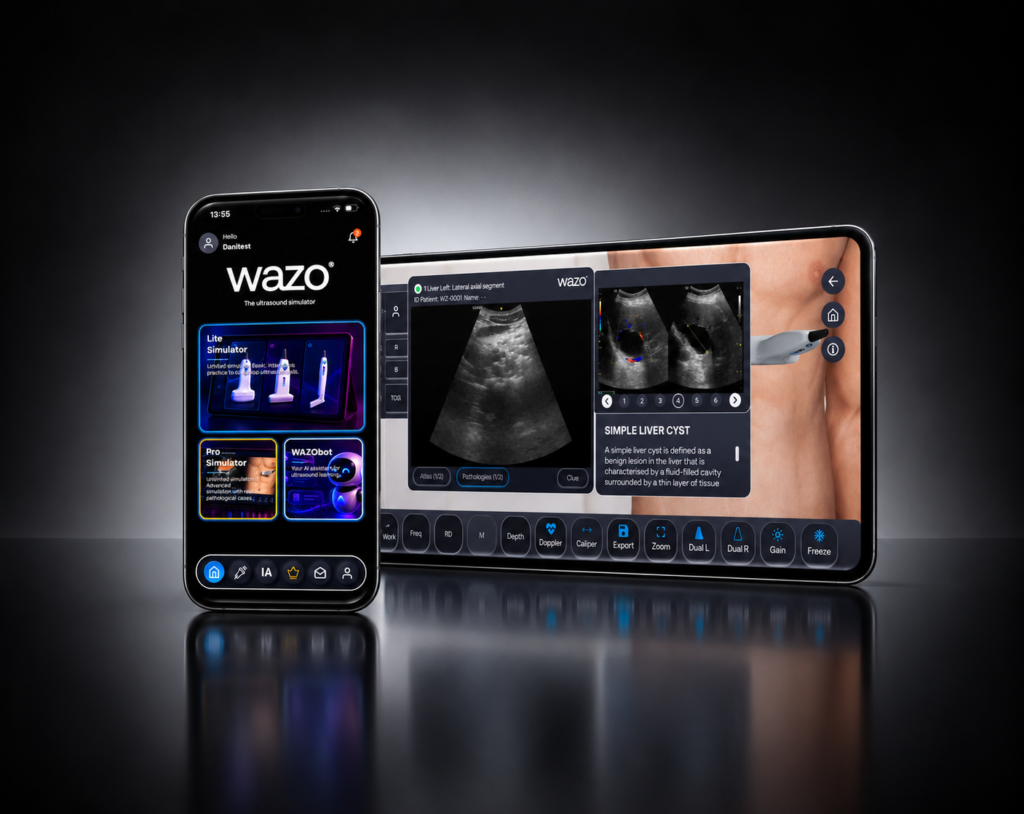
Wazo® is an international medical technology company specializing in advanced ultrasound simulation and training solutions. With product presence in more than 40 countries, we are driving forward the digital transformation of health care education through scalable technology, constant innovation, and a globally-accessible learning model.
Team
We combine clinical knowledge, scientific excellence, and technological skills in a multi-disciplinary team focused on innovation and international growth. Our structure combines specialization, agility, and strategic vision to develop high value solutions aimed at health care professionals, universities, and institutions all over the world.



Research
Research
Research, scientific validation, and continuous improvement are fundamental pillars of our strategy. Over a decade of research, analysis, and validation in clinical and academic settings, we have published findings in high-impact scientific journals that have guided the development and technological evolution of Wazo®.
Ultrasound education using digital technologies is supported by existing scientific evidence available in accessible databases, demonstrating its validity and reliability and providing a solid foundation for new educational models. The main challenge was to develop a low-cost educational model that would not require additional tools or devices that could increase costs, while making training accessible to healthcare professionals worldwide. Existing models relied primarily on individual, high-cost training methods, such as portable ultrasound devices, phantoms, and face-to-face instruction. Another major challenge was to demonstrate the acquisition of practical skills through simulation, as the possibility of developing these skills without physically handling an ultrasound probe or scanner was not widely accepted by the scientific community and remained an empirical question. However, the effectiveness of simulation-based training has already been demonstrated in other fields of human knowledge and technology, including aviation, Formula 1 racing, and surgical simulation. These approaches offer significant advantages, including reduced costs and the removal of financial barriers to education in certain regions of the world; improved knowledge acquisition through accelerated learning processes; enhanced safety and reliability, as demonstrated by studies comparing simulation-based training with traditional educational methods; broader access to education through the reach and scalability of web-based platforms; and a reduced carbon footprint resulting from the lower energy consumption associated with digital training compared with conventional educational models. Below is a selected list of relevant scientific references on the use of digital technologies and simulation in ultrasound education:
- Fernández-Carnero S, Cuenca-Zaldivar JN, Pecos-Martín D, Achalandabaso-Ochoa A, Ferragut-Garcias A, Gallego-Izquierdo T. Validity and reliability of methods for sonography education in physiotherapy: onsite vs. online. Appl Sci (Basel). 2020;10(18):6456. doi:10.3390/app10186456.
- Fernandez-Carnero S, Diaz-Pulido B, Méndez-Rodriguez J, Pecos-Martin D, Garcia-Miguel S, Achalandabaso-Ochoa A, Cuenca-Zaldívar N, Naranjo-Cinto FS. Digital simulation–based ultrasound training in physiotherapy students: blinded randomized controlled trial applying item response theory. JMIR Med Educ. 2026 Apr 22:87897. Forthcoming. doi:10.2196/87897.
- Huang Q, Huang X, Liu L, Lin Y, Long X, Li X. A case-oriented web-based training system for breast cancer diagnosis. Comput Methods Programs Biomed. 2018;156:161-173. doi:10.1016/j.cmpb.2017.12.028.
- Nolte K, Van der Merwe RA, Helena CA, Nolte HW, Van der Meulen J. A comparison between skinfold callipers and ultrasound imaging for assessing body composition in recreationally active students. Ergonomics SA. 2016;28(1):12-24. doi:10.4314/esa.v28i1.3.
- McKiernan S, Chiarelli P, Warren-Forward H. A comparison between workshop and DVD methods of training for physiotherapists in diagnostic ultrasound. Radiography (Lond). 2013;19(1):13-18. doi:10.1016/j.radi.2012.07.003.
- Savage NJ, Barnes KR, Dobbins AM, Barrett PL. A pilot study of a synchronous virtual ultrasound imaging module for physiotherapy education. Physiother Res Int. 2026;31:e70180. doi:10.1002/pri.70180.
- Maloney S, Haas R, Keating JL, Molloy E, Jolly B, Sims J, et al. Breakeven, cost benefit, cost effectiveness, and willingness to pay for web-based versus face-to-face education delivery for health professionals. J Med Internet Res. 2012;14(2):e47. doi:10.2196/jmir.2040.
- Nitsche JF, Shumard KM, Brost BC. Development and assessment of a novel task trainer and targeting tasks for ultrasound-guided invasive procedures. Acad Radiol. 2017;24(11):1410-1417.
- Woodworth GE, Carney PA, Cohen JM, Kopp SL, Vokach-Brodsky LE, Horn JLE, et al. Development and validation of an assessment of regional anesthesia ultrasound interpretation skills. Reg Anesth Pain Med. 2015;40(4):306-314.
- Krishnan S, Kuhl T, Ahmed W, Togashi K, Ueda K. Efficacy of an online education program for ultrasound diagnosis of pneumothorax. Anesthesiology. 2013;118(3):715-721.
- Vegas A, Meineri M, Jerath A, Corrin M, Silversides C, Tait G. Impact of online transesophageal echocardiographic simulation on learning to navigate the 20 standard views. J Cardiothorac Vasc Anesth. 2013;27(3):531-535.
- Shaw-Battista J, Young-Lin N, Bearman S, Dau K, Vargas J. Interprofessional obstetric ultrasound education: successful development of online learning modules, case-based seminars, and skills labs for registered and advanced practice nurses, midwives, physicians, and trainees. J Midwifery Womens Health. 2015;60(6):727-734. doi:10.1111/jmwh.12382.
- Mitchell JD, Mahmood F, Wong V, Bose R, Nicolai DA, Wang A, et al. Teaching concepts of transesophageal echocardiography via web-based modules. J Cardiothorac Vasc Anesth. 2015;29(5):1108-1113
- Neubauer R, Recker F, Bauer CJ, Brossart P, Schäfer VS. The current situation of musculoskeletal ultrasound education: a systematic literature review. Ultrasound Med Biol. 2023;49(6):1363-1374. doi:10.1016/j.ultrasmedbio.2023.02.008.
- Fernández-Lao C, Cantarero-Villanueva I, Galiano-Castillo N, Caro-Morán E, Díaz-Rodríguez L, Arroyo-Morales M. The effectiveness of a mobile application for the development of palpation and ultrasound imaging skills to supplement the traditional learning of physiotherapy students. BMC Med Educ. 2016;16:274. doi:10.1186/s12909-016-0777-1.
- Schrank EC, Abraham K, Wilson MJ, Myers WV, King MG. The reliability of rehabilitative ultrasound imaging measurements of the lumbar multifidi recorded by physical therapist students with minimal training. J Phys Ther Educ. 2011;25(2):57-63.
- So S, Patel RM, Orebaugh SL. Ultrasound imaging in medical student education: impact on learning anatomy and physical diagnosis. Anat Sci Educ. 2017;10(2):176-189. doi:10.1002/ase.1630.
- Eimer C, Duschek M, Jung AE, Zick G, Caliebe A, Lindner M, et al. Video-based, student tutor- versus faculty staff-led ultrasound course for medical students: a prospective randomized study. BMC Med Educ. 2020;20:512. doi:10.1186/s12909-020-02431-8.
- Khan R, Plahouras J, Johnston BC, Scaffidi MA, Grover SC, Walsh CM. Virtual reality simulation training in endoscopy: a Cochrane review and meta-analysis. Endoscopy. 2019;51(7):653-664. doi:10.1055/a-0894-4400.